

What Does Garage Door Maintenance Really Involve?
Your garage door is likely the largest moving component in your home, and keeping it in good condition plays an important role in everyday safety and convenience. Many homeowners overlook regular care until a more serious issue appears, often at the worst possible time. Understanding what garage door maintenance actually involves is an essential first step, because it shapes how you think about upkeep and sets expectations for long-term performance.
Proper garage door tune-up & maintenance go beyond reacting to problems as they arise and instead focus on a thoughtful approach to routine checks and ongoing oversight that keep the system operating smoothly. With insight drawn from years of hands-on experience, it becomes easier to recognize what truly matters and which elements can be monitored over time without concern. This kind of consistent attention helps extend the life of your garage door, reduces unnecessary worries, and provides a lasting sense of confidence in how your home functions day to day.
What Garage Door Maintenance Includes
A well-planned garage door maintenance routine focuses on keeping every component working together as a single system. It begins with a thorough visual review of the door and its supporting parts, including the panels, tracks, and smaller hardware elements. During this process, attention is given to early signs of wear such as rust, cracks, or parts that no longer sit in proper alignment. Identifying these issues early makes it easier to address minor concerns before they develop into larger problems, which supports the long-term performance of both the door and the garage door opener.
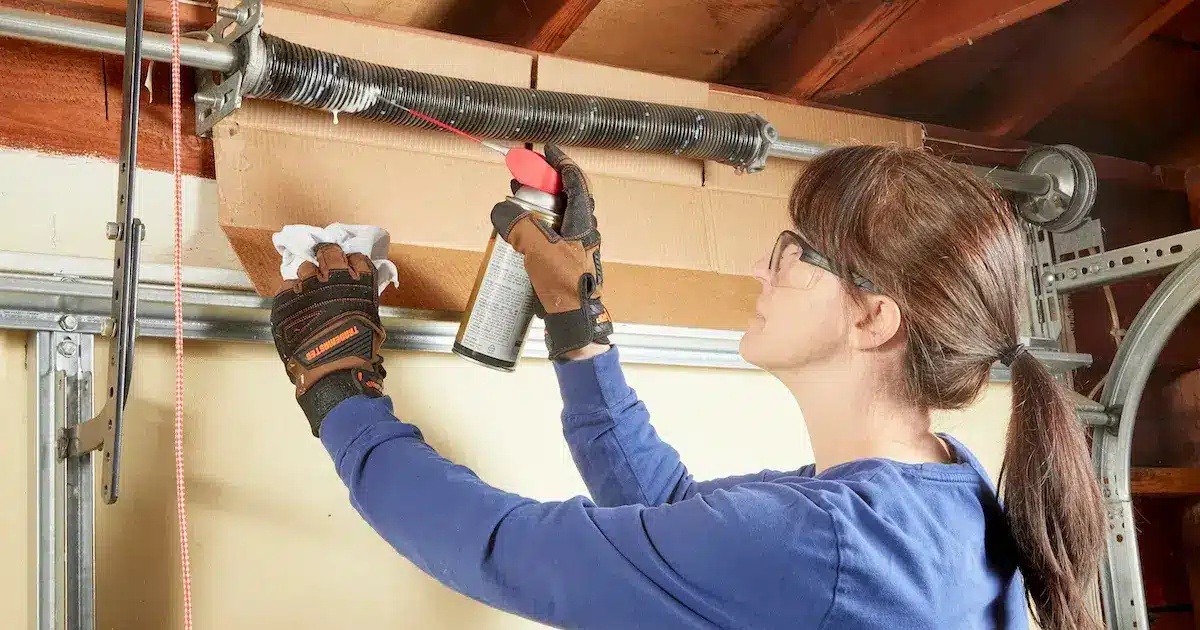
Maintenance also involves caring for the parts that move every time the door operates. Tracks are cleared of built-up debris, loose hardware is secured, and appropriate lubrication is applied to reduce friction between components. These steps help limit noise and resistance during operation, which often signal strain within the system. While each task may seem small on its own, together they play an essential role in keeping the garage door operating smoothly and consistently.
For a deeper look at scheduling and timing, the blog “How Often Is Garage Door Maintenance Needed?” provides more detail.
The Role of a Garage Door Tune-Up in Routine Garage Door Maintenance
A garage door tune-up serves as a scheduled review of how the system functions as a whole. Rather than focusing only on appearance, this process evaluates how each component works during operation and how well those parts interact. Much like a routine health check, a tune-up allows potential issues to be identified early, helping reduce the likelihood of unexpected failures and supporting long-term reliability.
During a tune-up, attention is given to the mechanical performance of the door. Adjustments and minor corrections are made to ensure smooth movement and balanced operation, which helps reduce unnecessary strain on the system. While basic visual observations can be made by a homeowner, a detailed tune-up is best handled by someone familiar with how each part affects the overall function of the door.
A typical garage door tune-up may include:
- Testing the door balance to reduce stress on the motor
- Securing nuts, bolts, and roller brackets that may loosen over time
- Applying appropriate lubrication to hinges, rollers, and springs to limit friction
- Examining cables and springs for early signs of wear due to regular tension
How a Garage Door Inspection Fits Into Ongoing Maintenance
A garage door inspection is a foundational part of any effective maintenance plan because it focuses on reviewing the entire system with careful attention to detail. Through consistent inspections, potential issues can be identified before they interfere with daily operation or lead to more extensive damage. This proactive approach supports both safety and reliability over time.
An inspection typically involves reviewing each visible component. Door panels are checked for cracks, bends, or warping, while tracks are examined for rust or misalignment that could restrict movement. Moving parts such as rollers, hinges, and cables are also reviewed for signs of wear or damage. Looking at each element individually helps provide a clear picture of the door’s current condition and performance.
In addition to mechanical components, inspections also cover built-in safety features and garage door opener service to ensure the entire system works as intended. Sensors near the floor are checked to confirm they remain properly aligned and unobstructed, and the auto-reverse function is tested to verify it responds correctly during operation. These safety elements, along with proper opener performance, play a critical role in preventing accidents, which is why they should always be included when evaluating the overall condition of a garage door system.
Preventive Garage Door Maintenance and Safety
The purpose of preventive garage door maintenance is to support safe and dependable operation every time the door is used. A garage door is a heavy system that operates under constant tension, which means even minor issues can create safety concerns if they are left unaddressed. By identifying wear or misalignment early and addressing concerns before they escalate, preventive maintenance helps reduce risk and protects both the people in your home and the surrounding property.
Effective garage door care goes beyond surface-level upkeep and extends to the systems designed to protect users during operation. Built-in safety features such as auto-reverse mechanisms and photo-eye sensors play a critical role in preventing accidents when something unexpected enters the door’s path. Ensuring these components function as intended is a core part of responsible maintenance and helps reinforce overall system reliability. Understanding how safety checks and lubrication support this process provides a clearer picture of why preventive care matters.
For additional insight into the risks of neglect, the blog “What Happens If Garage Door Maintenance Is Ignored?” explores this topic further.
Why a Garage Door Safety Check Is Part of Preventive Garage Door Maintenance
A garage door safety check is an essential element of preventive garage door maintenance because it focuses specifically on the features designed to reduce the risk of injury or damage. Over time, safety components can drift out of alignment or lose responsiveness due to regular use. A structured safety check helps confirm that these systems continue to respond correctly and provide protection during daily operation.
This process centers on powered safety features found on modern garage doors, most notably the auto-reverse function and the photo-eye sensors. The auto-reverse mechanism is designed to stop and reverse the door if resistance is detected, while the photo-eye sensors respond when their beam is interrupted. Reviewing these elements helps confirm that the door reacts appropriately when an obstruction is present, which is critical for maintaining a safe environment.
A comprehensive garage door safety check typically involves reviewing how these features respond under normal operating conditions, including:
- Verifying that the auto-reverse mechanism responds when contact is detected
- Confirming that photo-eye sensors stop and reverse the door when their beam is interrupted
If any part of the safety system does not respond as expected, it signals the need for further attention to restore proper operation.
The Purpose of Garage Door Lubrication Services in Maintenance
Garage door lubrication services play an important role in maintaining smooth and consistent operation. Components such as rollers, hinges, and springs move repeatedly throughout the day, which naturally creates friction and gradual wear. Without proper lubrication, this friction can lead to increased noise, added strain on the opener, and reduced overall efficiency.
Applying lubrication correctly helps minimize resistance where metal components interact, allowing the door to move more quietly and with less effort while reducing strain on critical parts. Proper lubrication focuses on targeted areas rather than excessive application, ensuring that moving components remain protected without attracting unnecessary buildup, which can also help identify conditions that may eventually require broken spring replacement. When included as part of a regular maintenance routine, lubrication supports long-term performance and reduces stress on the system as a whole.
Lubrication is commonly applied to:
- Hinges that connect the door panels
- Rollers and their supporting brackets
- Torsion springs are located along the center shaft
- Bearings inside rollers and end bearing plates
Together, these steps help the garage door operate with greater ease, contributing to a quieter system and more consistent performance over time.
When Garage Door Maintenance Is Needed and What It Covers
Knowing when to schedule regular garage door maintenance is just as important as understanding what that maintenance involves. In most cases, planning a full system check at least once a year provides a reliable baseline for ongoing care. An annual review helps address normal wear and tear before it develops into more serious concerns, allowing potential issues to be identified early rather than discovered during an unexpected failure.
That said, certain signs can indicate the need for attention sooner than a yearly schedule allows. Unusual sounds such as grinding or squeaking often suggest increased friction or loosening hardware, while uneven movement, slower operation, or a door that appears out of balance can point to developing mechanical strain. Responding to these changes promptly helps limit further wear and reduces the likelihood of more extensive damage. The ideal timing for maintenance can also be influenced by external factors, which are outlined below.
For a closer look at component-level priorities, the blog “Which Parts Matter Most in Garage Door Maintenance?” offers helpful insight.
Factors That Affect the Timing of Garage Door Maintenance
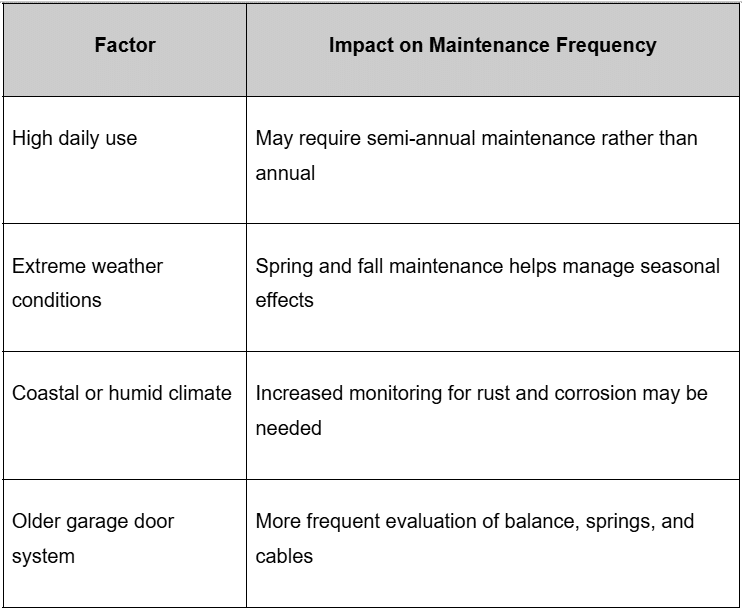
Although an annual maintenance schedule works well for many households, several conditions can increase how often a garage door should be evaluated. One of the most influential factors is how frequently the door is used. Garage doors that function as a primary entrance and operate multiple times each day are subject to greater stress than those used only occasionally. In higher-use situations, more frequent reviews can help support consistent performance.
Environmental exposure also plays a meaningful role in maintenance timing, as prolonged heat can cause components to expand while cold temperatures may lead to brittleness in metal parts. Homes in regions with pronounced seasonal shifts often benefit from maintenance checks in both spring and fall, allowing the system to be prepared for upcoming conditions and assessed for any seasonal impact. Additional considerations, such as system age or ongoing exposure to moisture, can further influence how closely the door should be monitored, including the potential need for cable replacement as wear develops over time.
Components Commonly Reviewed in a Garage Door Maintenance Checklist
A garage door maintenance checklist provides a clear way to review the entire system without overlooking important details, beginning with a visual inspection of the most visible components. Door panels should be checked for cracks or dents, while the tracks should appear straight, clean, and free of rust so the door can move smoothly along its path. From there, attention shifts to the hardware and moving parts that support daily operation, including rollers, hinges, and cables, which should be examined for visible wear or damage. Torsion springs deserve special caution since they operate under significant tension, making visual checks for rust or obvious breaks appropriate while leaving adjustments to trained professionals. The final step focuses on protective elements such as the bottom rubber seal and side weatherstripping, which help block drafts, moisture, and pests, ensuring the system remains efficient and secure. Key components commonly reviewed during this process include door panels, tracks, and alignment, rollers, hinges, and cables, torsion and lift springs, and the bottom seal, along with surrounding weatherstripping.
Knowing how to care for your garage door plays an important role in keeping it reliable over the long term. Regular checks and scheduled tune-ups make it easier to identify potential issues early, allowing normal wear to be addressed before it develops into more serious problems. Consistent attention helps the entire system operate smoothly and reduces unnecessary strain on its components, which supports longer service life and steadier performance. A well-maintained garage door also contributes to overall household safety, providing reassurance that the system will function as expected day after day and offering lasting peace of mind for everyone at home.
For homeowners who want dependable support and clear guidance, Ingenious Garage Door Services delivers thoughtful, detail-focused garage door care backed by hands-on experience. Our approach emphasizes long-term reliability, safety, and system performance rather than quick fixes. If you are ready to take the next step toward protecting your garage door and your home, contact us today or give us a call to schedule an appointment and get expert assistance you can trust.
Frequently Asked Questions
What equipment is typically involved in a professional garage door tune-up?
A professional tune-up involves tools designed to adjust and test mechanical systems accurately. Technicians typically use socket wrenches to secure hardware, professional-grade lubricants for moving components, and cleaning materials to clear tracks and sensors. Diagnostic tools are also used to test balance, alignment, and safety functions, allowing issues to be identified and addressed safely on site.
How do technicians decide when routine garage door maintenance is no longer sufficient?
Technicians rely on visible wear and functional testing to determine whether maintenance alone can resolve an issue. Frayed cables, cracked panels, heavily corroded springs, or components that no longer respond correctly signal deeper mechanical problems. When normal adjustments can no longer restore safe operation, further repair or component replacement becomes necessary to prevent failure.
What issues are commonly identified during a garage door safety check or inspection?
Safety checks often reveal misaligned or obstructed photo-eye sensors, improper door balance, or opener settings that place unnecessary strain on the system. Loose hardware, debris in the tracks, and worn moving parts are also common findings, all of which can interfere with smooth operation and compromise safety if left unaddressed.
Do garage doors require ongoing garage door maintenance to remain reliable over time?
Yes, ongoing maintenance is essential because a garage door system relies on multiple moving parts that are used repeatedly throughout the day, which naturally leads to gradual wear over time. Without regular attention, this wear can build up unnoticed and increase the risk of unexpected breakdowns that disrupt daily routines. Consistent maintenance helps support reliable operation and reduces sudden interruptions, a point also reinforced by Fix It Home AU, which highlights how preventive care plays a key role in extending the overall lifespan of a garage door system.
What does preventive garage door maintenance generally involve?
Preventive maintenance focuses on identifying concerns before they develop into failures. It typically includes visual inspections, safety feature testing, hardware tightening, track cleaning, and lubrication of moving parts. Together, these steps help maintain smooth operation and reduce long-term strain on the system.
Which garage door components tend to receive the most attention during maintenance reviews?
Maintenance reviews concentrate primarily on high-stress components such as rollers, hinges, cables, and torsion springs. Tracks are also closely evaluated for alignment and obstructions, as even small issues in these areas can affect overall door movement and stability.
Why is routine garage door maintenance important for long-term operational safety?
Routine maintenance helps identify early signs of fatigue in springs, cables, and safety systems before failure occurs. Regular checks ensure safety features respond correctly and mechanical parts remain stable, reducing the risk of sudden malfunctions that could lead to injury or damage.
What role does garage door maintenance play in extending overall system lifespan?
Maintenance reduces unnecessary stress on the system by keeping components properly aligned, lubricated, and balanced. This limits premature wear on major parts such as the opener and springs, allowing the entire system to operate efficiently for a longer period.
Are garage door openers included in standard garage door inspection and maintenance evaluations?
Yes, openers are a key part of routine evaluations because they control how the entire system moves and responds during daily use. Inspections typically involve reviewing the drive mechanism, connections, force settings, travel limits, and safety features to confirm the opener operates smoothly and stays in sync with the door, an approach also outlined by OAC Property when discussing essential maintenance services that support reliable garage door performance.
What is typically documented in a garage door maintenance checklist?
A maintenance checklist records the condition of major components, results of safety testing, observations related to springs and cables, and notes on alignment, balance, and lubrication. It provides a clear snapshot of system health and highlights any areas that may require future attention.
A professional tune-up involves tools designed to adjust and test mechanical systems accurately. Technicians typically use socket wrenches to secure hardware, professional-grade lubricants for moving components, and cleaning materials to clear tracks and sensors. Diagnostic tools are also used to test balance, alignment, and safety functions, allowing issues to be identified and addressed safely on site.
Technicians rely on visible wear and functional testing to determine whether maintenance alone can resolve an issue. Frayed cables, cracked panels, heavily corroded springs, or components that no longer respond correctly signal deeper mechanical problems. When normal adjustments can no longer restore safe operation, further repair or component replacement becomes necessary to prevent failure.
Safety checks often reveal misaligned or obstructed photo-eye sensors, improper door balance, or opener settings that place unnecessary strain on the system. Loose hardware, debris in the tracks, and worn moving parts are also common findings, all of which can interfere with smooth operation and compromise safety if left unaddressed.
Yes, ongoing maintenance is essential because a garage door system relies on multiple moving parts that are used repeatedly throughout the day, which naturally leads to gradual wear over time. Without regular attention, this wear can build up unnoticed and increase the risk of unexpected breakdowns that disrupt daily routines. Consistent maintenance helps support reliable operation and reduces sudden interruptions, a point also reinforced by Fix It Home AU, which highlights how preventive care plays a key role in extending the overall lifespan of a garage door system.
Preventive maintenance focuses on identifying concerns before they develop into failures. It typically includes visual inspections, safety feature testing, hardware tightening, track cleaning, and lubrication of moving parts. Together, these steps help maintain smooth operation and reduce long-term strain on the system.
Maintenance reviews concentrate primarily on high-stress components such as rollers, hinges, cables, and torsion springs. Tracks are also closely evaluated for alignment and obstructions, as even small issues in these areas can affect overall door movement and stability.
Routine maintenance helps identify early signs of fatigue in springs, cables, and safety systems before failure occurs. Regular checks ensure safety features respond correctly and mechanical parts remain stable, reducing the risk of sudden malfunctions that could lead to injury or damage.
Maintenance reduces unnecessary stress on the system by keeping components properly aligned, lubricated, and balanced. This limits premature wear on major parts such as the opener and springs, allowing the entire system to operate efficiently for a longer period.
Yes, openers are a key part of routine evaluations because they control how the entire system moves and responds during daily use. Inspections typically involve reviewing the drive mechanism, connections, force settings, travel limits, and safety features to confirm the opener operates smoothly and stays in sync with the door, an approach also outlined by OAC Property when discussing essential maintenance services that support reliable garage door performance.
A maintenance checklist records the condition of major components, results of safety testing, observations related to springs and cables, and notes on alignment, balance, and lubrication. It provides a clear snapshot of system health and highlights any areas that may require future attention.


