







How to Lubricate a Garage Door
TL;DR – How to Lubricate Your Garage Door:
- Clean the tracks – Wipe away dirt and debris with a damp cloth
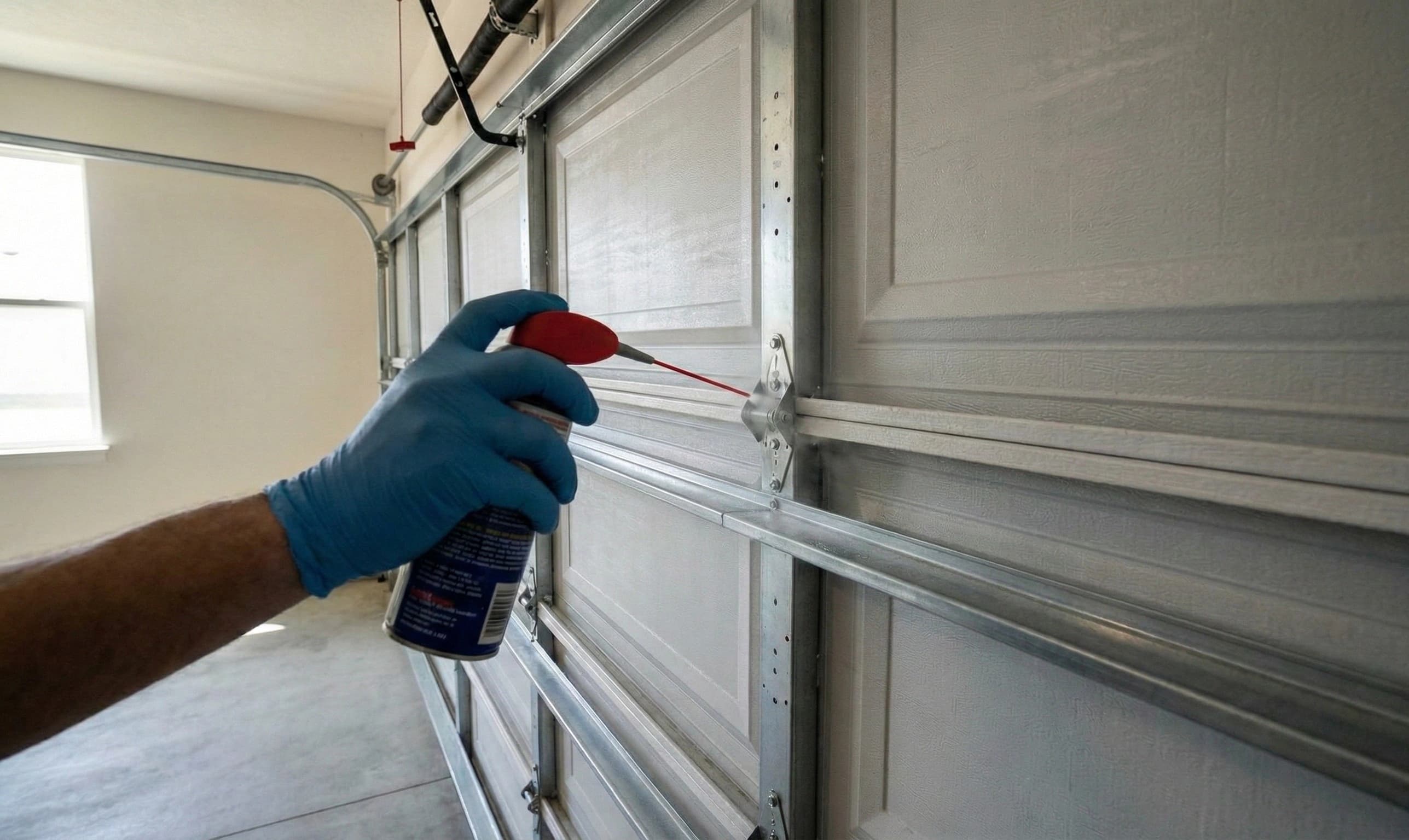
- Spray the hinges – Apply lubricant to all hinge pivot points
- Coat the rollers – Lubricate the roller bearings, not the wheels
- Treat the springs – Spray torsion and extension springs generously
- Lubricate the tracks – Light coating on the inside rails only
- Test the door – Open and close several times to spread the lubricant
Regular lubrication keeps your garage door running quietly and extends the life of its parts. Without it, metal components grind against each other and wear out faster. Houston’s humidity and heat can make this worse by causing rust and corrosion on unprotected metal parts.
Why Garage Door Lubrication Matters
Most garage doors open and close 1,500 times per year. Each cycle creates friction between moving parts. Over time, this friction wears down components and creates that annoying squeaking sound many Houston homeowners deal with.
Components That Need Lubrication
Your garage door has several parts that need regular attention:
- Hinges where door sections connect
- Roller bearings that help the door glide
- Torsion springs above the door
- Extension springs on the sides
- Track rails where rollers move
The bearings inside your rollers are probably the most important part to lubricate. They spin every time your door moves.
Benefits of Regular Maintenance
Lubrication does more than just quiet things down. It protects metal from rust, which is a real problem in our humid climate. Parts move more smoothly, so your opener doesn’t work as hard. This can add years to both your door and opener.
You’ll also notice the door operates more smoothly. It won’t jerk or stick in certain spots. That smooth operation puts less stress on the garage door opener motor and springs.
What You’ll Need for Lubrication
Don’t use WD-40 or general-purpose oils. These actually attract dust and dirt, which makes problems worse. You need the right type of lubricant for garage doors.
Right Lubricants to Use
Silicone-based spray lubricants work best for most garage door parts. They don’t attract dirt and handle temperature changes well. Lithium-based grease is another good option for moving parts.
White lithium grease works great for roller bearings and hinges. It stays put better than spray lubricants. Some people prefer it for springs, too.
Never use these products on garage doors:
- WD-40 (it’s a solvent, not a lubricant)
- Motor oil or cooking oil
- Grease meant for cars
- Any product that attracts dust
Tools and Supplies
You won’t need much to get this done:
- Silicone or lithium spray lubricant
- Clean rags or old towels
- Step ladder for reaching high parts
- Work gloves to keep hands clean
That’s basically it. Maybe a damp cloth for wiping the tracks clean first. The whole job is pretty simple once you have the right spray.
Step-by-Step Lubrication Guide
Start by closing your garage door completely. This makes it easier to reach all the parts safely. Unplug the opener or disconnect it so the door won’t move while you’re working.
Preparation Steps
First, clean the tracks with a damp cloth. You want to remove dirt and debris, not lubricate it into place. Don’t spray lubricant directly into tracks – it attracts gunk.
Look over all the moving parts while you’re cleaning. Check for worn rollers or loose hinges. It’s easier to spot problems during maintenance than to wait for something to break.
Lubricating Moving Parts
Start at the top and work your way down. This keeps drips from landing on parts you already finished.
Hinges: Spray each hinge where the pin goes through. You’ll see the pivot point – that’s what needs lubricant. Most doors have 8-12 hinges, depending on the number of sections.
Rollers: The bearings need attention, not the nylon or rubber wheels. If your rollers are metal, spray the shaft where it enters the roller. Nylon rollers with bearings still need lubricant on the bearing only.
Springs: Torsion springs above the door should get a good coating. Spray them from several angles so the lubricant reaches all the coils. Extension springs on the sides need the same treatment. Be generous here – springs do most of the heavy lifting.
Tracks: Just wipe the inside rails clean. If they’re really dirty, a light spray of lubricant on a cloth works for cleaning, but don’t leave excess in there.
Top roller and bearing plate: These parts at the top corners take a lot of stress. Don’t forget them.
Testing and Final Checks
Plug the opener back in and open the door about halfway. This spreads the lubricant around. Close it, then open it fully. Run through three or four cycles.
Listen for any squeaking or grinding. If you still hear noise, you might have missed a spot. The door should move smoothly without jerking.
Wipe up any drips on the floor or door panels. Excess lubricant just collects dirt anyway.repair
When to Call a Professional
Some situations need more than just lubrication. If maintenance doesn’t fix your problem, something else is wrong.
Signs You Need Help
- The door still squeaks loudly after lubricating all parts
- Springs show rust or gaps between coils
- Rollers are cracked or wobbly in the tracks
- The door binds or sticks even with fresh lubricant
- Cables are frayed or coming off the pulleys
Don’t try to adjust or repair springs yourself. They’re under extreme tension and can cause serious injuries. Let professionals handle spring issues.
If your door is more than 15 years old and is making noise despite lubrication, it might be time for new parts. Worn rollers and old hinges can’t be fixed with spray lubricant.
Professional Garage Door Service in Houston
Ingenious Garage Door provides complete maintenance and repair services throughout the Greater Houston area. We’ve been helping local homeowners keep their garage doors running smoothly with same-day service and quality work.
Our technicians can spot problems during routine maintenance before they become expensive repairs. We handle everything from lubrication service to complete spring replacement.
Call us today for fast, professional service.
Same-Day Service Available
We serve Houston, Sugar Land, Katy, The Woodlands, Cypress, Pearland, Spring, Tomball, Richmond, and surrounding areas.
Frequently Asked Questions
How often should I lubricate my garage door?
Can I use WD-40 to lubricate my garage door?
No, WD-40 isn’t a good choice for garage doors. It’s actually a solvent that cleans and removes rust, but it doesn’t provide lasting lubrication. Use silicone-based or lithium-based lubricants designed specifically for garage doors.
Should I lubricate the garage door tracks?
Why is my garage door still noisy after lubricating it?
What's the difference between silicone and lithium lubricant?
Silicone spray is thinner and easier to apply to hard-to-reach spots. Lithium grease is thicker and stays in place longer, which makes it better for high-stress parts like roller bearings. Both work well for garage doors – it’s mostly personal preference.
Do I need to lubricate a new garage door?
Can lubrication fix a garage door that won't open?
Lubrication won’t fix a door that won’t open at all. That’s usually caused by broken springs, disconnected cables, or opener problems. Lubrication only helps with noise and smooth operation, not major mechanical failures.


Yes, even new garage doors need regular lubrication. The factory applies some lubricant, but it wears off with use. Start your maintenance schedule right away to protect your investment and keep the warranty valid.